Celebrating the Fur Trade Heritage
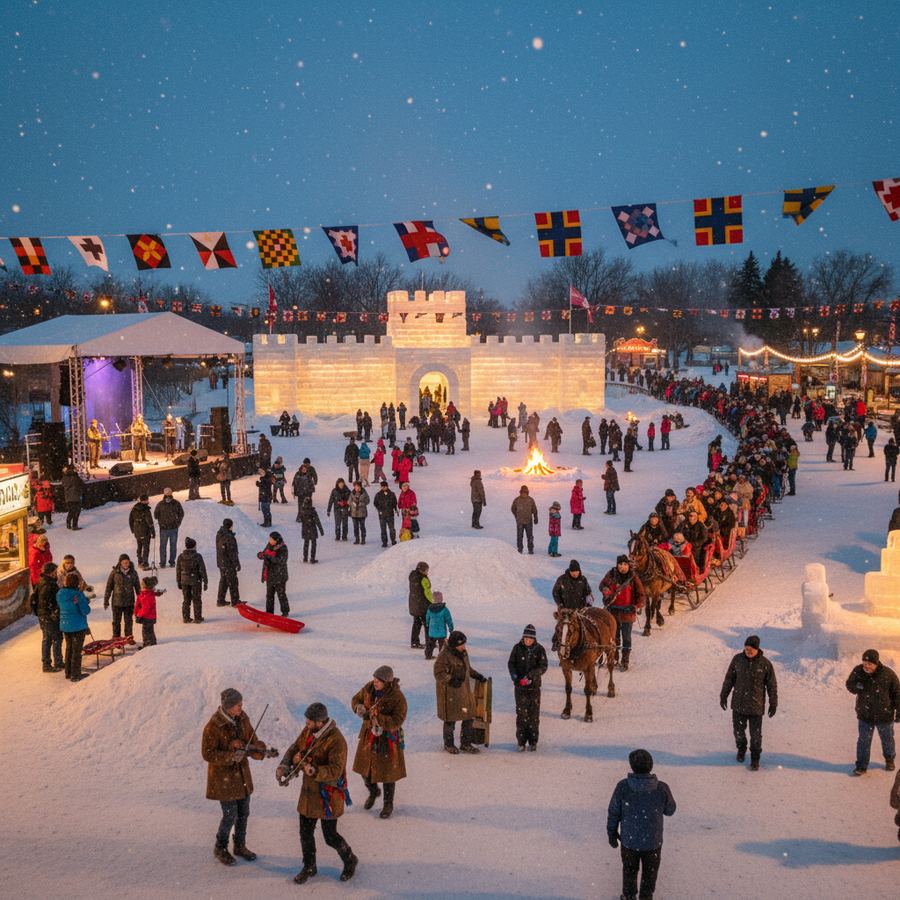
Festival du Voyageur is Western Canada's largest winter festival, held annually in Winnipeg's French Quarter of Saint-Boniface during the second and third weeks of February. The ten-day event celebrates the history, culture, and resilience of the voyageurs, the French-Canadian and Metis fur traders who paddled birchbark canoes across the continent's waterways in the 18th and 19th centuries. Since its founding in 1970, the festival has become one of Winnipeg's defining cultural events and a powerful reminder that this prairie city has deep French-Canadian roots.
The festival is anchored at Voyageur Park, a temporary winter village built on the grounds of Whittier Park in Saint-Boniface. Inside the park, heated tents host continuous live music, dancing, and storytelling, while outdoor areas feature snow sculptures, a trading post, and activities ranging from snowshoeing to log sawing. The combination of outdoor winter celebration and indoor warmth gives the festival a cozy, communal atmosphere that feels more like a giant neighbourhood party than a formal event.
Quick Facts
- Location:
- Winnipeg, Manitoba (Saint-Boniface)
- Dates:
- Mid-February (10 days)
- Founded:
- 1970
- Attendance:
- Approximately 100,000 visitors
- Cost:
- Admission by day pass or festival pass
- Highlight:
- International Snow Sculpture Symposium
History and Origins
The festival was created in 1970 by the Saint-Boniface community as a way to celebrate French-Canadian culture in Manitoba and bring life to Winnipeg during the coldest stretch of winter. The founding organizers drew inspiration from the voyageur era, when Winnipeg (then the Red River Settlement) served as a major hub for the fur trade. The voyageurs themselves were legendary for their endurance, their songs, and their ability to find joy in harsh conditions, and the festival channels that spirit.
From modest beginnings as a neighbourhood celebration, the festival has grown into a major cultural event with international participation in its snow sculpture competition and a musical lineup that draws performers from across the francophone world. Despite its growth, the festival has maintained its grassroots character. Many of the volunteers and performers are members of the local Franco-Manitoban community, and the event serves as an annual gathering point for francophones from across Western Canada.
Festival Highlights
Snow Sculpture Competition
The International Snow Sculpture Symposium is one of the festival's marquee attractions. Teams from around the world are given identical blocks of compacted snow and five days to transform them into finished sculptures using only hand tools. The results are displayed throughout the festival grounds, and the range of styles from realistic to abstract provides something for every taste. Past entries have included everything from detailed animal portraits to sprawling abstract compositions that play with light and shadow.
Music and Dancing
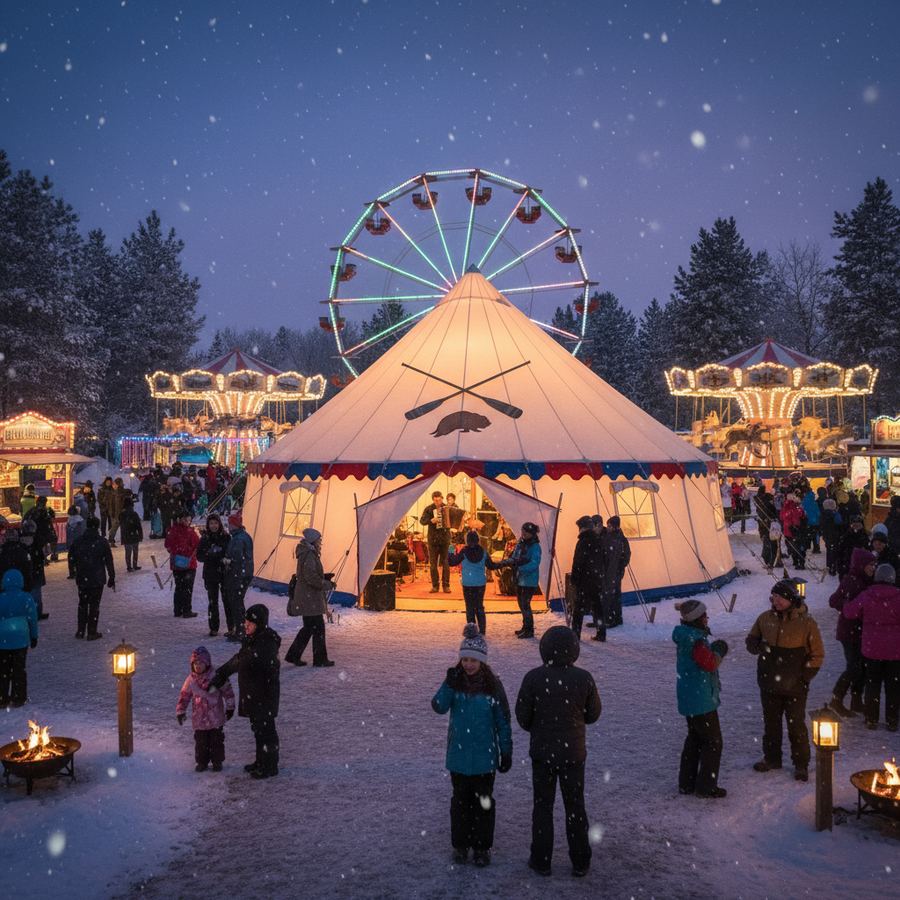
Live music is the pulse of the festival. The heated tents at Voyageur Park host continuous performances from morning until late evening, with a lineup that includes traditional fiddle music, Metis jigging, Franco-Manitoban singer-songwriters, and touring acts from Quebec, France, and francophone Africa. The Fiddling Frog tent is the most popular venue for traditional music and dancing, and on weekend nights the energy inside is remarkable. Even if you have never tried jigging, the crowd will pull you onto the floor.
Historical Programming
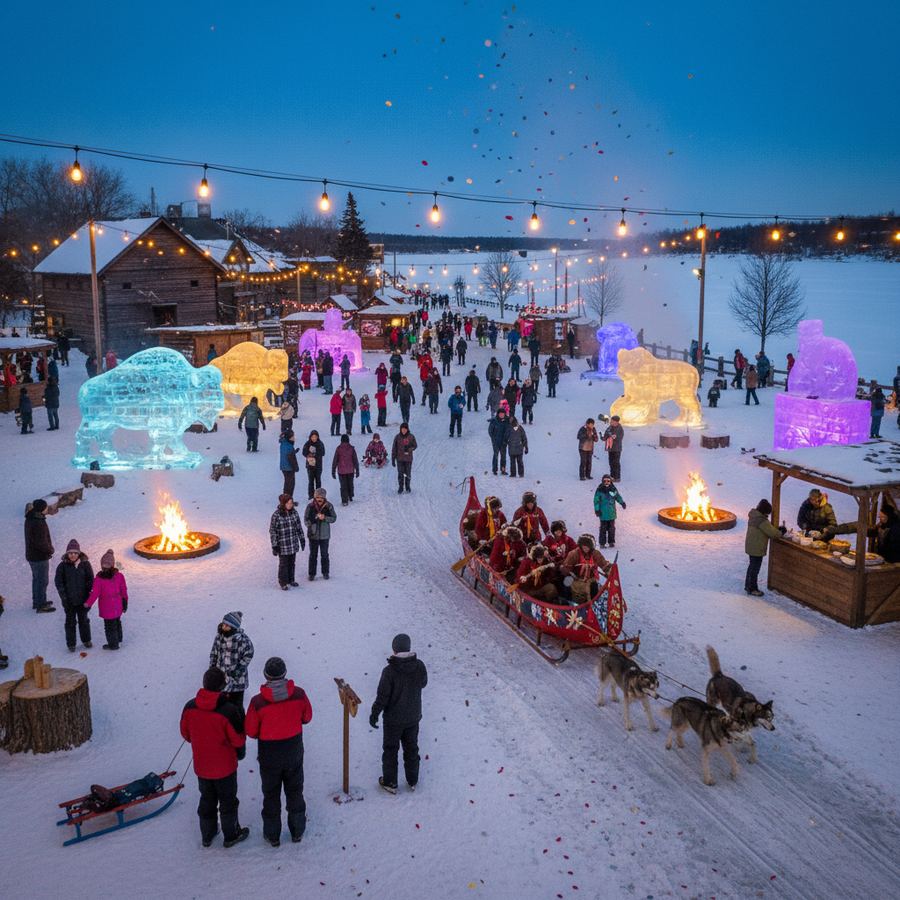
Costumed interpreters at the trading post and throughout the festival grounds bring the voyageur era to life. You can watch demonstrations of traditional skills like snowshoe making, fur preparation, and bannock baking over an open fire. The programming is educational without being dry, and it provides valuable context for understanding why this particular cultural heritage resonates so strongly in Manitoba.
Cuisine
The food at Festival du Voyageur is one of its strongest draws. Hearty French-Canadian and Metis dishes dominate the menu: pea soup, tourtiere (meat pie), poutine, maple taffy on snow, and bannock with various toppings. The Voyageur Trading Post tent serves traditional meals in a communal setting that evokes the spirit of a fur-trade era gathering hall. Bring your appetite; the portions are generous and the cold weather makes everything taste better.
Planning Your Visit
Getting There
Voyageur Park is located in Saint-Boniface, just across the Red River from downtown Winnipeg. The park is accessible by city transit, and additional shuttle services run during the festival. If driving, paid parking is available near the park, though spots fill up quickly on weekend evenings. The neighbourhood itself is worth exploring, with the Saint-Boniface Cathedral, the Riel House National Historic Site, and several excellent French restaurants within walking distance.
What to Wear
Winnipeg in February is one of the coldest urban environments on the planet, with temperatures regularly dropping below minus-twenty Celsius. The festival is designed around this reality, with heated tents providing regular respite, but you will still spend significant time outdoors. A heavy parka, insulated boots, thermal layers, and a good toque are mandatory. Winnipeg locals will tell you that the key to enjoying winter here is dressing properly and then refusing to let the cold win.
Related Events
Quebec Winter Carnival
The world's largest winter carnival shares Festival du Voyageur's French-Canadian spirit.
Manitoba Events
More festivals and fairs across the province of Manitoba.
Event Details
- Winnipeg, MB
- February (10 days)
- ~100,000 visitors
- Winter / Cultural