A Tradition That Defines Canadian Winter
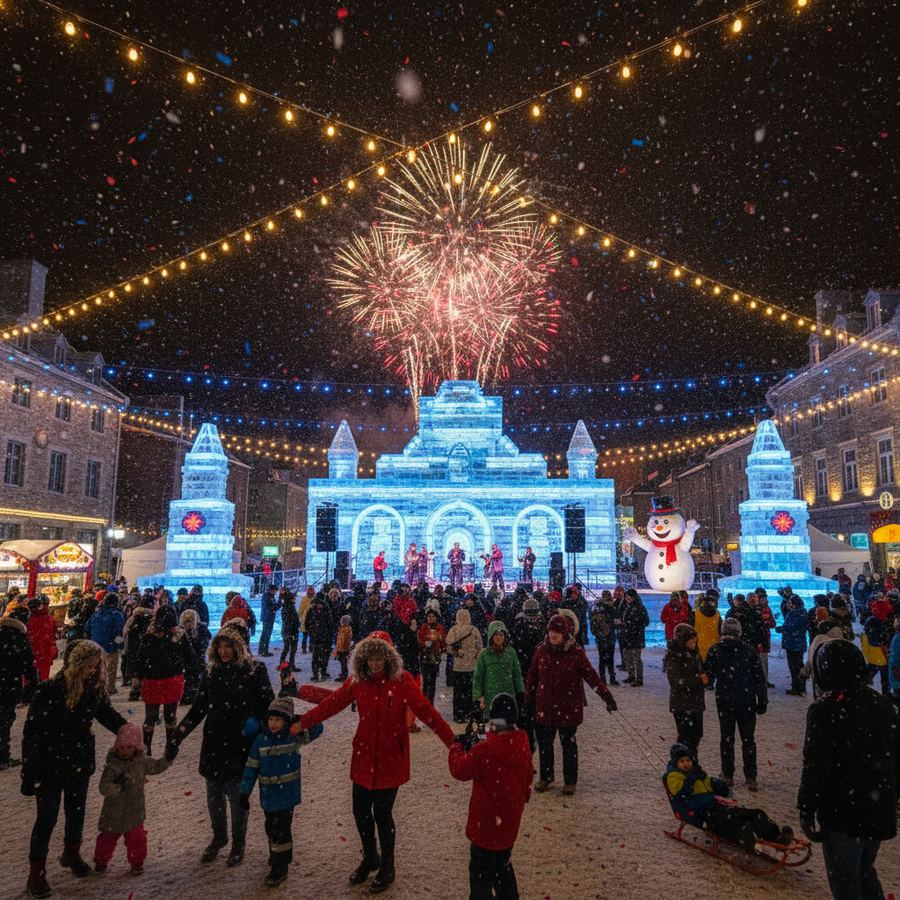
The Quebec Winter Carnival, known in French as the Carnaval de Quebec, is the largest winter carnival on the planet and one of Canada's most iconic cultural events. Every year in late January through mid-February, Quebec City transforms into a frozen wonderland of ice sculptures, night parades, snow baths, and outdoor celebrations that attract hundreds of thousands of visitors from around the world.
What makes this carnival special is its deep roots in Quebec culture. While many winter festivals around the world are relatively modern inventions designed to boost off-season tourism, the Quebec Winter Carnival traces its origins to the 1890s and reflects a genuine French-Canadian tradition of turning the coldest, darkest weeks of winter into a reason to celebrate rather than hibernate. The spirit of the event is embodied by Bonhomme Carnaval, the smiling snowman mascot who has presided over the festivities since 1954.
Quick Facts
- Location:
- Quebec City, Quebec
- Dates:
- Late January to mid-February (annually)
- Founded:
- 1894 (modern era since 1954)
- Attendance:
- Approximately 400,000 visitors per year
- Mascot:
- Bonhomme Carnaval
- Cost:
- Effigy (wristband) required for main site access
History of the Carnaval
The first recorded winter carnival in Quebec City took place in 1894, inspired by similar events held in Montreal during the 1880s. Those early celebrations featured ice castles, snowshoe races, and toboggan slides, and they drew visitors from across North America who were curious to see how Quebecers celebrated the depths of winter. The event ran intermittently through the early 1900s, pausing during both World Wars and the Great Depression.
The modern incarnation of the carnival was established in 1954, when a group of Quebec City business leaders decided to create a permanent annual event that would bring life to the city during its quietest season. They introduced Bonhomme Carnaval as the official mascot and built the first Ice Palace on the Plains of Abraham. The formula worked immediately. Within a few years the carnival had become one of the most recognized winter events in the world, and it has run continuously every year since.
What to Expect at the Carnival
The Ice Palace
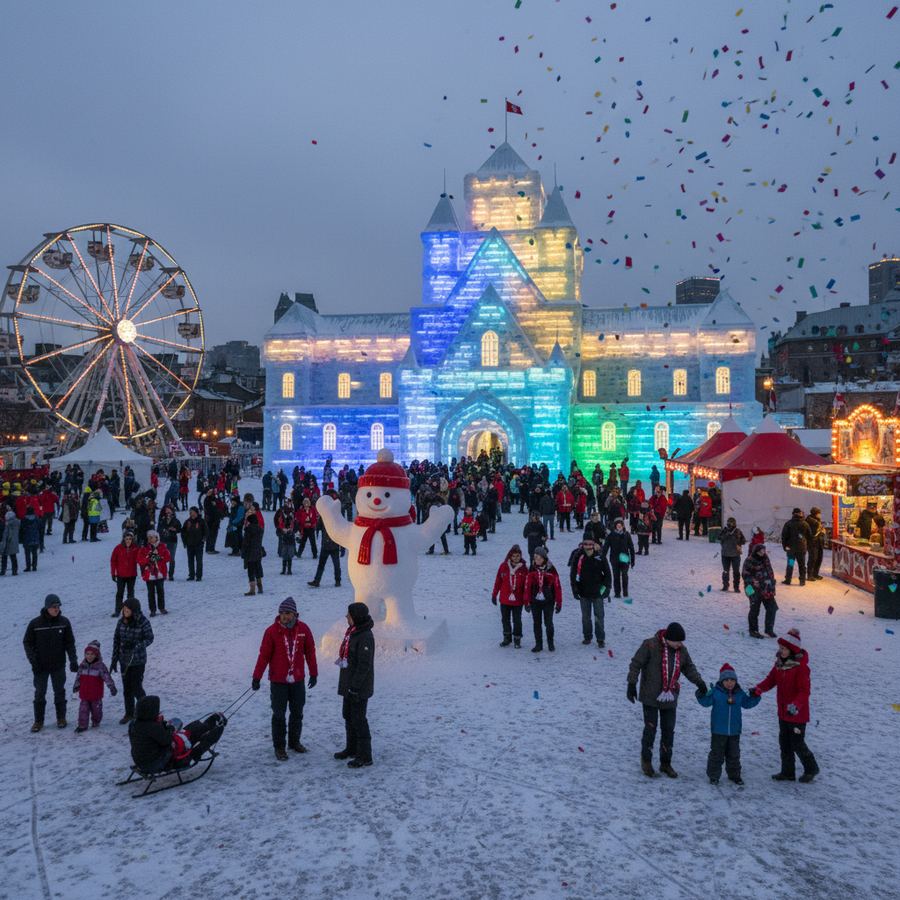
The centrepiece of the carnival grounds is Bonhomme's Ice Palace, a towering structure rebuilt from scratch every year using blocks of ice cut from local rivers. The palace serves as the ceremonial heart of the event, where Bonhomme holds court and welcomes visitors. The architectural style changes annually, but the palace is always illuminated at night and serves as one of the most photographed landmarks in Quebec City during carnival season.
Night Parades
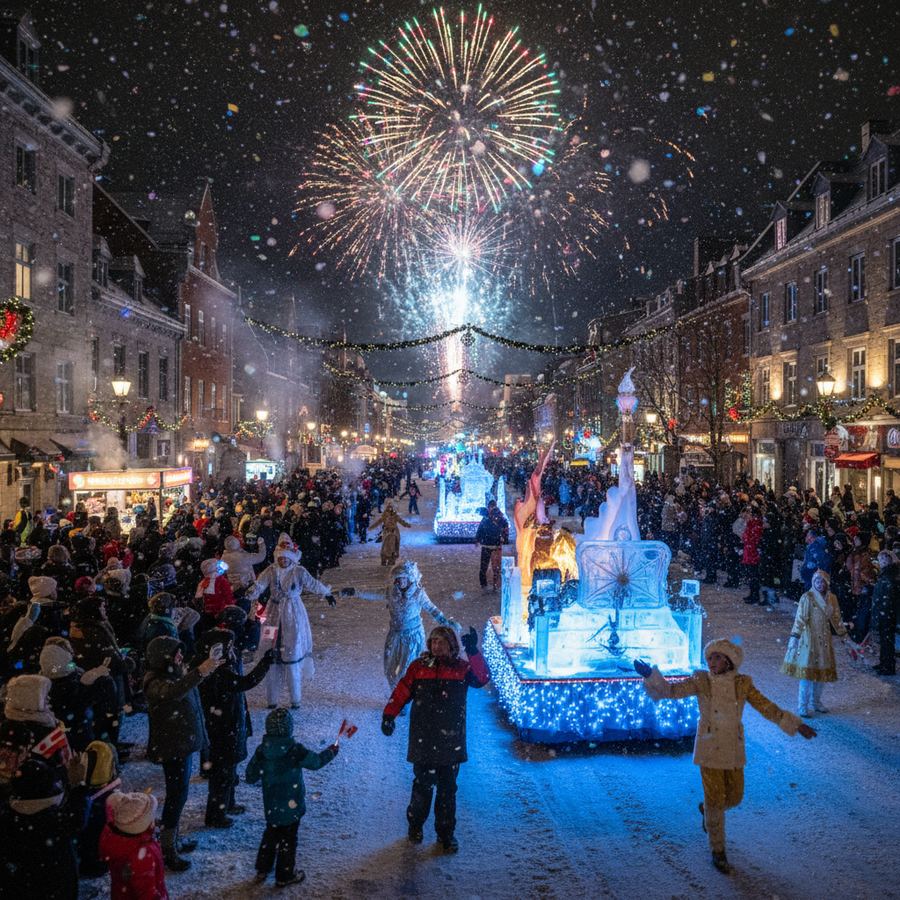
The night parades are among the most popular attractions. Illuminated floats wind through the streets of Old Quebec while marching bands, dancers, and costumed performers entertain crowds that line the route several rows deep. The atmosphere is electric despite the cold. Veterans of the parade route recommend arriving early to claim a spot near the start of the route, where the energy of the performers is at its peak.
Snow Baths
Perhaps the most uniquely Quebecois tradition at the carnival is the snow bath. Brave participants strip down to their swimsuits and roll around in the snow while spectators cheer them on. It is exactly as cold as it sounds, and exactly as entertaining to watch. The snow bath has become one of the defining images of the carnival and a rite of passage for daring visitors.
Canoe Race on the St. Lawrence
Teams of five paddlers race canoes across the partially frozen St. Lawrence River, hauling their boats over ice floes and paddling through frigid open water. The ice canoe race dates back to a time when crossing the river in winter was a practical necessity rather than a competitive sport. Today it is one of the most thrilling spectator events at the carnival and a test of endurance that few other sporting events can match.
Snow Sculptures
International teams compete to create elaborate snow sculptures on the Plains of Abraham. The competition draws artists from dozens of countries, and the finished works remain on display throughout the carnival for visitors to admire. The scale and artistry of the sculptures improve every year, and the competition has become a destination in its own right for fans of outdoor art.
Planning Your Visit
Getting There
Quebec City is served by Jean Lesage International Airport, with direct flights from Toronto, Montreal, and several U.S. cities. The city is also accessible by train via VIA Rail from Montreal (approximately three hours) or by car along Highway 20 or the Trans-Canada. If you are driving, be prepared for winter road conditions and allow extra travel time.
Where to Stay
Hotels in Old Quebec fill up quickly during carnival season, and prices reflect the demand. Booking two to three months in advance is recommended for the best selection. The Chateau Frontenac and Hotel de Glace (the ice hotel) are the most iconic accommodation options, but there are dozens of boutique hotels and bed-and-breakfasts in the Old City and surrounding neighbourhoods that offer a more affordable base within walking distance of the carnival grounds.
What to Wear
Quebec City in late January and early February is genuinely cold. Daytime highs frequently sit below minus-ten Celsius, and evening temperatures during the night parade can drop to minus-twenty-five or lower with wind chill. Layering is essential. Insulated boots, thermal base layers, a heavy winter coat, and a balaclava or neck warmer are not optional. Hand warmers tucked into gloves make a noticeable difference during extended time outdoors.
The Effigy
Access to the main carnival site on the Plains of Abraham requires purchasing an Effigy, a plastic trumpet-shaped souvenir that doubles as your admission pass. The Effigy can be purchased online in advance or at kiosks around Quebec City during the carnival. Many activities outside the main site are free, but the Effigy gives you access to the core experience including the Ice Palace, snow slides, and main-stage entertainment.
Related Events and Guides
Winterlude in Ottawa
Another iconic Canadian winter festival, just a few hours west along the St. Lawrence corridor.
Winter Carnivals Across Canada
Our complete roundup of the best winter carnivals from coast to coast.
Winter Carnival Packing List
Detailed gear guide for staying warm and comfortable at any outdoor winter event.
Quebec Events
Browse all carnivals and festivals in the province of Quebec.
Event Details
- Quebec City, QC
- Jan - Feb (annually)
- ~400,000 visitors
- Winter Festival
- Effigy pass required