Canadian Carnival & Festival Calendar
A month-by-month guide to carnivals, fairs, and festivals happening across Canada throughout the year.
The Canadian Carnival Year
Canada's carnival and festival calendar runs twelve months of the year, shaped by the country's dramatic seasonal shifts and deep regional traditions. From frozen outdoor celebrations in January to massive summer exhibitions in August, there is always something happening somewhere in the country. Understanding the rhythm of the Canadian carnival year helps visitors plan trips, and gives organizers a sense of where their event fits in the broader landscape.
The calendar broadly divides into two peak seasons: the winter carnival months from January through March, and the summer fair and festival months from late June through early September. Between these peaks, spring and fall see scattered events, but the volume drops significantly. This pattern is driven by climate, school schedules, and the availability of outdoor venues and travelling midway operators who move their equipment across the country on a set circuit each year.
Winter: January Through March
Winter is the season that defines Canadian carnival culture in the eyes of the world. The tradition of holding community celebrations during the coldest months stretches back to the 1800s, when towns across Quebec, Ontario, and the Maritimes organized snowshoeing parties, sleigh races, and ice-cutting competitions to break up the long winter. That spirit is alive today in dozens of winter carnivals held from coast to coast.
January marks the start of winter carnival season. Events tend to be community-driven, organized by volunteer committees in smaller towns. Activities focus on what the season provides: snow sculptures, ice fishing, skating, snowshoe races, bonfires, and community suppers. The Banff Winter Carnival in Alberta is one of the oldest winter celebrations in Western Canada, while events like the Cochrane Winter Carnival and Riverview Winter Carnival bring communities together in Ontario and New Brunswick.
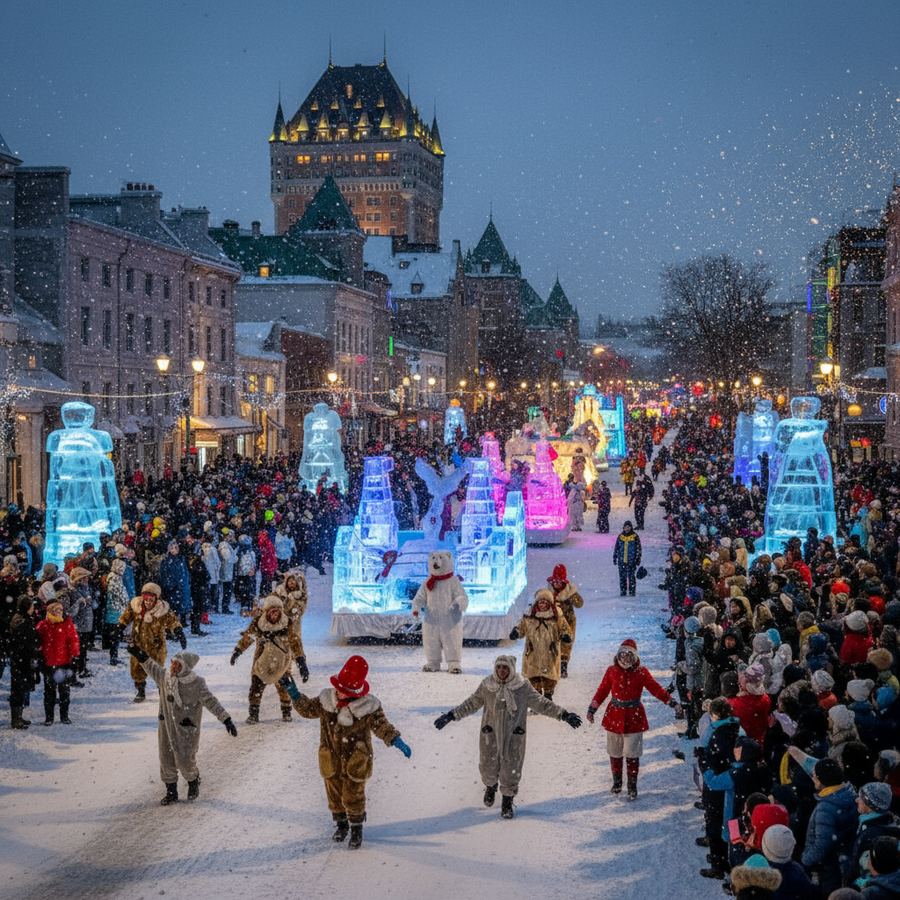
February is the peak of winter carnival season. The Quebec Winter Carnival is the flagship, drawing roughly one million visitors to Quebec City for 10 days of ice palaces, night parades, and canoe races on the St. Lawrence. Winterlude in Ottawa features ice sculptures and skating on the Rideau Canal. Festival du Voyageur in Winnipeg celebrates French-Canadian and Metis heritage with snow sculptures, jigging, and traditional food. Silver Skate Festival in Edmonton and Nutrien Wintershines in Saskatoon round out the major Prairie events. In Atlantic Canada, the Corner Brook Winter Carnival in Newfoundland is a beloved annual tradition.
March sees the tail end of winter carnival season. Some events that begin in late February extend into the first week of March, and a few communities hold their winter celebrations later to take advantage of slightly milder temperatures and longer daylight hours. By mid-March, the carnival calendar quiets down as the country transitions toward spring.
Summer: June Through September
The warm-weather carnival season is dominated by agricultural fairs, travelling midways, cultural festivals, and major urban exhibitions. Travelling carnival operators begin setting up in late May, and the circuit runs continuously through the Labour Day weekend in early September. During the peak summer months, it is common to find multiple fairs and festivals happening simultaneously across any given province.
July brings some of the biggest events of the year. The Calgary Stampede is a 10-day spectacle combining rodeo, chuckwagon racing, a massive midway, and live entertainment that draws over one million visitors. Cultural festivals also ramp up in July, with Caribbean carnival events beginning their summer runs in cities like Toronto, Montreal, and Ottawa. Community fairs and agricultural exhibitions start appearing at fairgrounds across rural Ontario, Quebec, the Prairies, and Atlantic Canada.
August is the busiest single month on the Canadian carnival calendar. The Canadian National Exhibition (CNE) in Toronto runs for 18 days and draws over 1.4 million visitors. The Pacific National Exhibition (PNE) in Vancouver offers a similar mix of rides, games, food, and entertainment. The Toronto Caribbean Carnival holds its Grand Parade in early August, filling Lakeshore Boulevard with masquerade bands and soca music. Across the country, dozens of regional fairs run through the month, from large events like the Western Fair in London, Ontario, to small-town agricultural exhibitions that have been running for over a century.
September wraps up the summer season. The Labour Day weekend marks the traditional close for many fairs and exhibitions. A few fall fairs extend into mid-September, especially in Ontario and Quebec, where the agricultural fair tradition runs deep. By the end of the month, the travelling midway operators have packed up and the country settles into fall.
Shoulder Seasons: Spring and Fall
April through early June and October through November are quieter periods on the carnival calendar. Spring sees a handful of community celebrations and the early planning stages for summer events. Fall brings harvest festivals, Thanksgiving events, and the occasional Halloween-themed fair. These shoulder seasons are less busy for attendees but are prime planning time for organizers preparing for the following winter or summer season.
Browse by Month