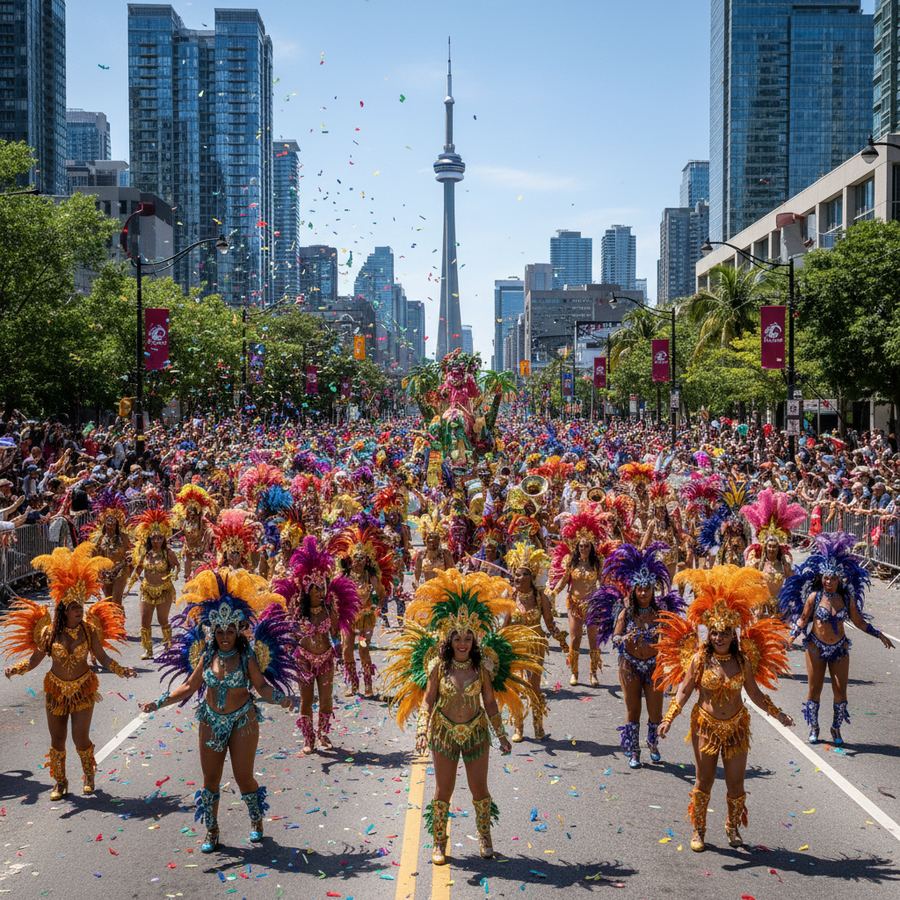
The Grand Parade and Beyond
The Toronto Caribbean Carnival, still widely known by its former name Caribana, is North America's largest Caribbean cultural festival and one of Toronto's most anticipated annual events. Running for approximately three weeks each summer with the Grand Parade typically held on the first Saturday in August, the festival celebrates Caribbean music, dance, cuisine, and artistry while drawing over a million visitors to the city and generating hundreds of millions of dollars in economic activity.
The festival was founded in 1967 as part of Canada's Centennial celebrations by members of Toronto's Caribbean community, and it has grown from a modest community parade into one of the premier cultural events in North America. The Grand Parade along Lake Shore Boulevard is the climax of the festival, featuring thousands of costumed masqueraders organized into bands that dance and parade to the rhythms of soca, calypso, dancehall, and steelpan music. The energy, colour, and sheer scale of the Grand Parade is unlike anything else in Canadian festival culture.
Quick Facts
- Location:
- Toronto, Ontario (Lake Shore Boulevard)
- Dates:
- Late July to early August
- Founded:
- 1967
- Attendance:
- Over 1 million visitors
- Highlight:
- Grand Parade (first Saturday in August)
History
The festival originated in 1967 when members of Toronto's growing Caribbean community organized a parade and celebration as their contribution to Canada's Centennial festivities. The event was initially called Caribana and was modelled on the Carnival traditions of Trinidad and Tobago, with costume bands, steelpan competitions, and calypso music at its core. The first parade drew modest crowds, but the combination of vibrant costumes, infectious music, and genuine cultural pride resonated with both the Caribbean community and the wider Toronto public.
Over the following decades the festival grew steadily, expanding from a single-day parade into a multi-week celebration that includes concerts, cultural events, food festivals, boat cruises, and community gatherings. The Grand Parade moved from its original route on University Avenue to the longer, more spacious Lake Shore Boulevard route, reflecting the event's growing scale. In 2011 the festival was officially renamed the Toronto Caribbean Carnival, though most Torontonians continue to call it Caribana.
The Grand Parade
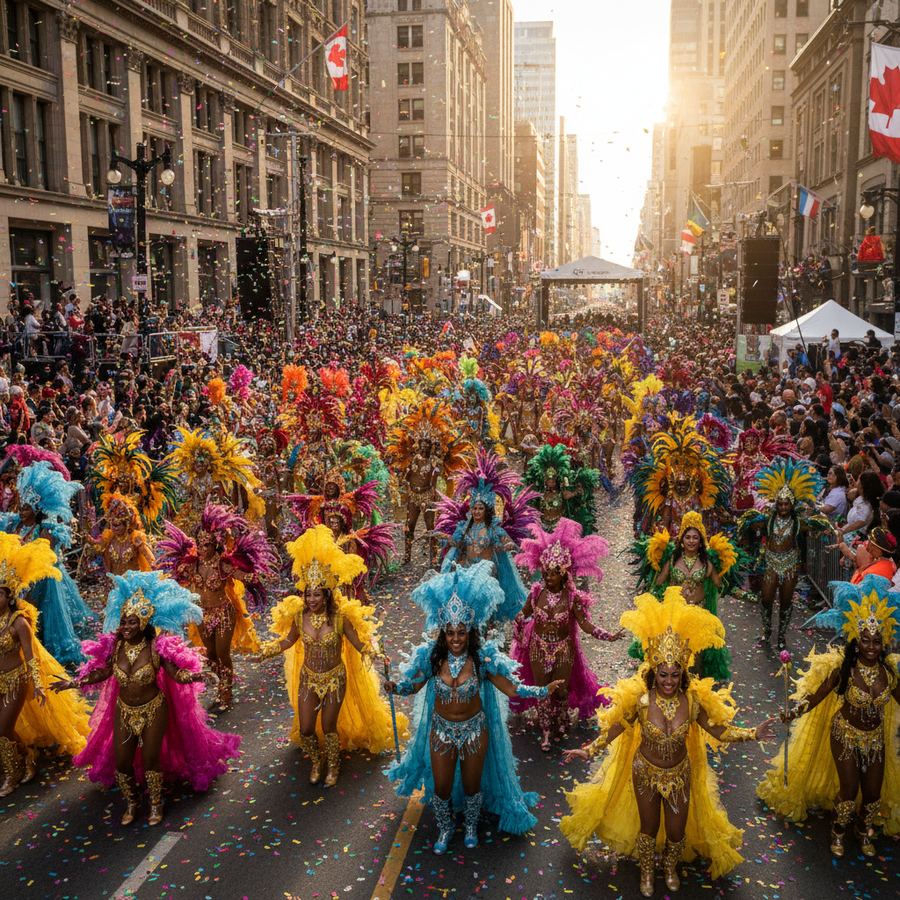
The Grand Parade is the centrepiece of the festival and one of the most visually spectacular events held anywhere in Canada. Costume bands, each with their own musical truck and hundreds of masqueraders, parade along Lake Shore Boulevard from Exhibition Place eastward. The parade begins in the morning and continues until late afternoon, with bands of all sizes taking their turn on the route.
The costumes are works of art, designed and constructed over months by band leaders and their teams. Each band chooses a theme for the year, and the individual costumes within the band interpret that theme through elaborate constructions of feathers, beads, sequins, wire frames, and fabric that can weigh dozens of pounds and span several feet in every direction. The largest and most prestigious bands invest tens of thousands of dollars in their presentations and compete fiercely for the titles of Band of the Year and King and Queen of the Bands.
Watching the Parade
Spectators line both sides of Lake Shore Boulevard, and the atmosphere is festive and welcoming. The best viewing spots fill up early in the morning, so arrive by 9:00 a.m. if you want a prime location. The section near Exhibition Place tends to be the most energetic, as bands are still fresh and the music trucks are at full volume. Bring sunscreen, water, and comfortable shoes, as you will be standing for several hours. Many spectators bring lawn chairs, coolers, and flags representing their Caribbean heritage.
Joining a Band
Visitors who want to be part of the parade rather than watching from the sidelines can register with a costume band. Registrations typically open months in advance and include the cost of your costume, food and drinks on parade day, and access to the band's section of the route. Prices vary by band and costume category, ranging from a few hundred dollars for a simpler costume to over a thousand for a premium frontline outfit. Playing mas (as participating in a band is called) is an unforgettable experience that offers a completely different perspective on the parade.
Beyond the Parade
Pan Alive
The steelpan competition is one of the festival's most respected events, showcasing the musical instrument invented in Trinidad and Tobago. Steel orchestras from across the Greater Toronto Area compete in categories ranging from small ensembles to full orchestras with over a hundred players. The performances are held at Lamport Stadium and are a must-see for music lovers.
King and Queen Competition
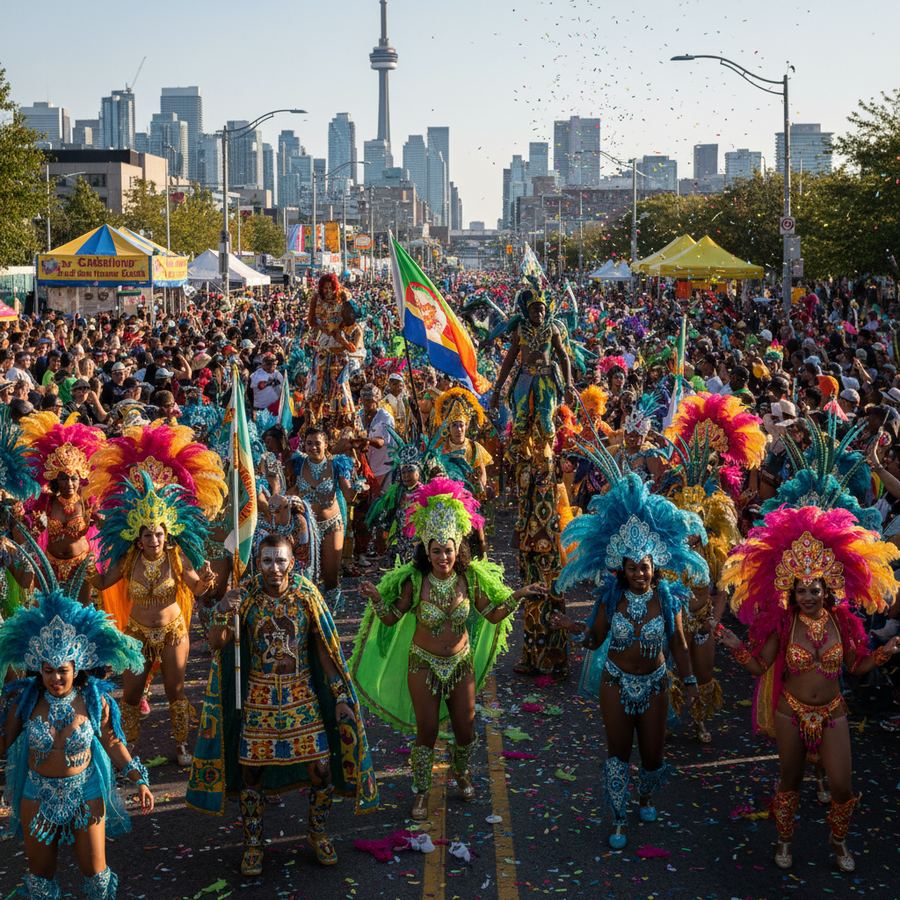
Before the Grand Parade, the King and Queen of the Bands competition showcases the most elaborate individual costumes from each band. These are massive, wearable sculptures that can stand over ten feet tall and require extraordinary athleticism to carry and dance in. The competition is held at Lamport Stadium and gives visitors a close-up look at the artistry and engineering that go into the top costumes.
Food
Caribbean cuisine is everywhere during the festival. Jerk chicken, roti, doubles, pelau, curry goat, fried plantain, and rum punch are staples at food vendors along the parade route and at the festival grounds. Several restaurants in the Eglinton West and Scarborough corridors, which are home to large Caribbean communities, also offer special menus during the festival period.
Planning Your Visit
The Grand Parade route along Lake Shore Boulevard is accessible by TTC streetcar and subway. The Exhibition or Dufferin Gate stops on the 509 and 511 streetcar routes put you close to the action. Driving is not recommended, as road closures and parking restrictions are extensive on parade day. Hotels in downtown Toronto fill up during the festival, and Airbnb availability in neighbourhoods near the route is limited, so book well in advance.
Related Events
Caribbean Carnivals in Canada
A guide to Caribbean carnival culture across Canadian cities.
Ontario Events
All festivals and fairs across the province of Ontario.
Event Details
- Toronto, ON
- Late Jul - Early Aug
- 1,000,000+ visitors
- Cultural Festival