Why Your Packing List Matters
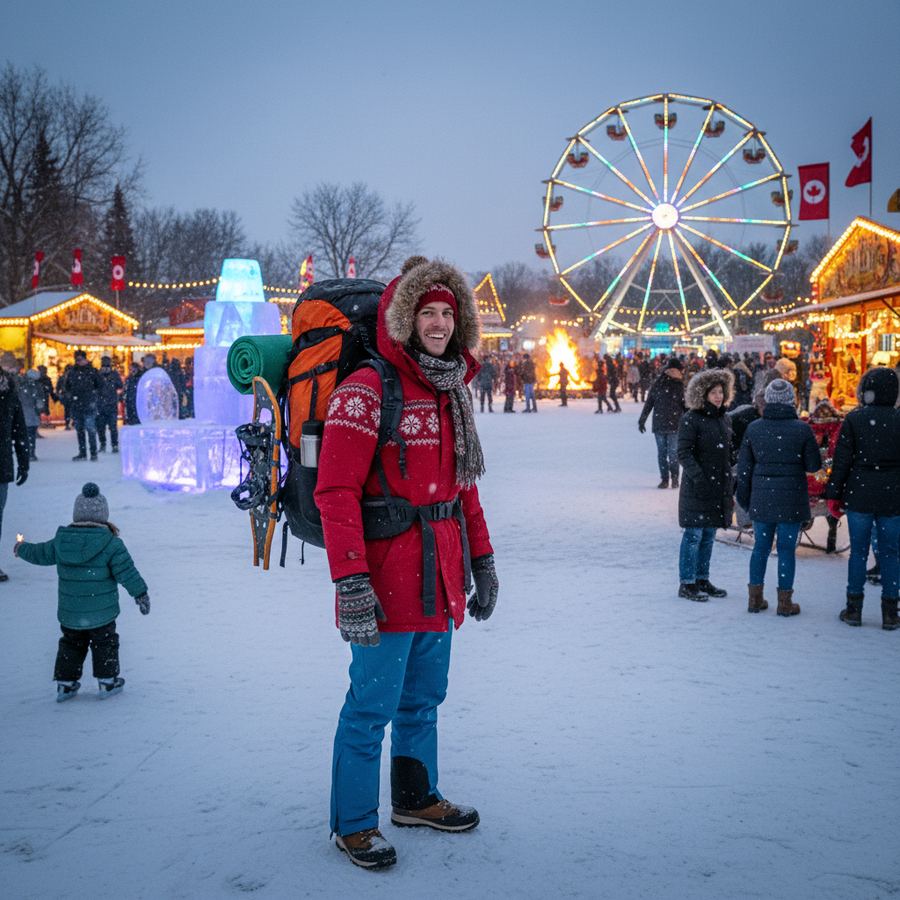
The single biggest factor that determines whether you enjoy a Canadian winter carnival or spend the day miserable is your clothing and gear. This is not an exaggeration. Winter carnivals take place outdoors in temperatures that routinely reach minus-fifteen to minus-thirty Celsius, with wind chill pushing the perceived temperature even lower. The events themselves are wonderful, but your ability to appreciate ice sculptures, night parades, and snow activities depends entirely on whether your body is warm enough to focus on what is happening around you rather than how cold you feel.
Canadians who grew up in cold climates understand this instinctively. Visitors from milder regions, and even Canadians from the south coast, often underestimate how cold winter carnivals can be and arrive underdressed. The result is shortened visits, discomfort, and a diminished experience. This guide is designed to ensure that does not happen to you. Invest in proper gear and you will be rewarded with one of the most unique and enjoyable festival experiences in the world.
The Layering System
Effective cold-weather dressing is based on the layering principle. Three layers, each with a specific purpose, work together to keep you warm and dry. The beauty of layering is that you can adjust by removing or adding layers as your activity level changes. Standing still watching a parade requires more insulation than walking briskly between attractions.
Base Layer
The base layer sits against your skin and its primary job is to wick moisture (sweat) away from your body. Wet skin loses heat dramatically faster than dry skin, so a good base layer is critical. Merino wool or synthetic fabrics (polyester, polypropylene) are the best choices. Avoid cotton base layers; cotton absorbs moisture and holds it against your skin, making you colder. A long-sleeve base layer top and base layer leggings or long underwear form the foundation of your outfit.
Mid Layer
The mid layer provides insulation by trapping air close to your body. Fleece, down, or synthetic insulation jackets are the standard choices. A thick fleece pullover or a lightweight down jacket works well for most winter carnival conditions. For extremely cold temperatures (below minus-twenty), you may want two mid layers: a light fleece plus a down vest or jacket.
Outer Layer (Shell)
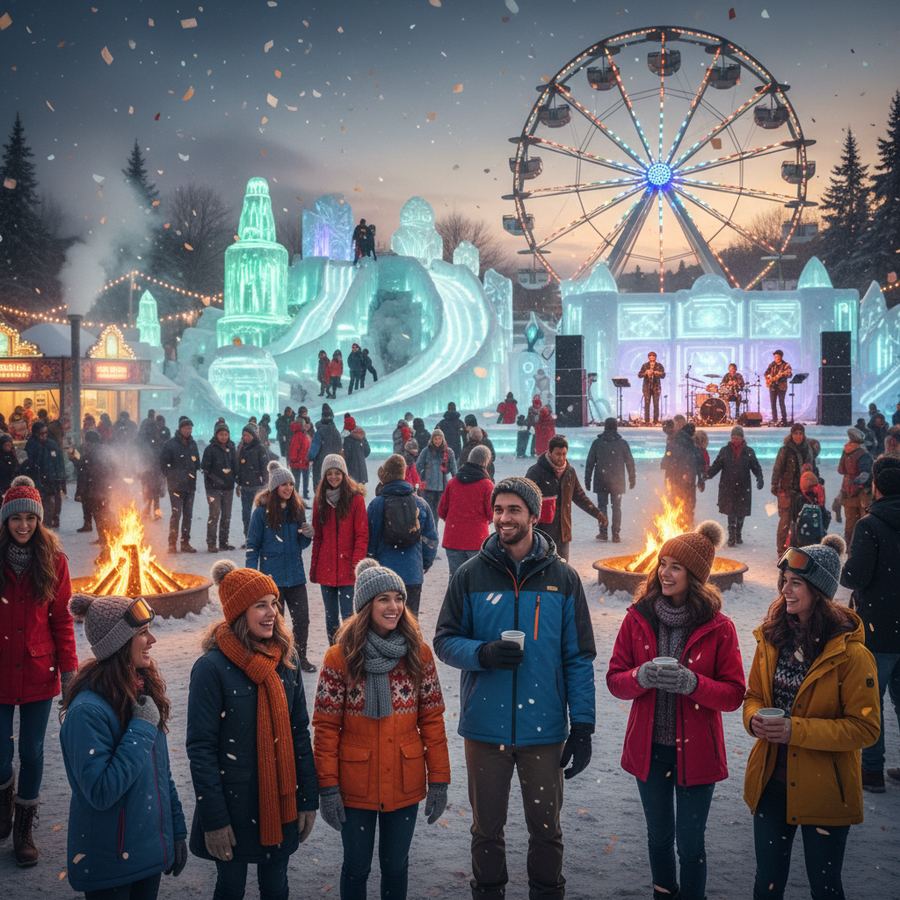
The outer layer protects against wind, snow, and moisture. A windproof, water-resistant winter parka is ideal. For events like the Quebec Winter Carnival or Festival du Voyageur, where you will be outdoors for extended periods, a parka rated for minus-twenty or colder is recommended. Look for a parka with a hood that can be cinched around your face to protect against wind. If you already own a good ski jacket, it will work well for most winter carnivals.
Essential Gear Checklist
Head and Neck
- Warm toque (winter hat): A wool or fleece toque that covers your ears is essential. You lose significant heat through your head.
- Neck warmer or balaclava: A fleece neck gaiter that can be pulled up over your nose and mouth protects the areas most vulnerable to wind chill. A balaclava provides even more coverage for extremely cold conditions.
- Sunglasses: Winter sun reflecting off snow and ice is bright enough to cause discomfort. Sunglasses also provide some wind protection for your eyes.
Hands
- Insulated gloves or mittens: Mittens are warmer than gloves because your fingers share heat. Insulated ski gloves are a good compromise if you need finger dexterity for phones and cameras.
- Hand warmers: Disposable hand warmers (available at any outdoor store) are inexpensive and make a significant difference. Tuck them inside your gloves or pockets. Bring at least two pairs for a full day outside.
- Liner gloves: Thin liner gloves worn under heavier gloves or mittens add a layer of warmth and allow you to use your phone without fully exposing your hands.
Feet
- Insulated winter boots: This is the single most important item on the list. Cold, wet feet will ruin your day faster than anything else. Choose boots rated to at least minus-twenty Celsius, with waterproof construction and good traction on ice. Sorel, Baffin, and Kamik are Canadian brands that make boots designed for exactly these conditions.
- Wool socks: Merino wool socks are the best choice for warmth and moisture management. Bring an extra pair in your bag in case the first pair gets damp.
- Toe warmers: Like hand warmers, adhesive toe warmers stick to the bottom of your socks and provide hours of supplemental heat.
Accessories
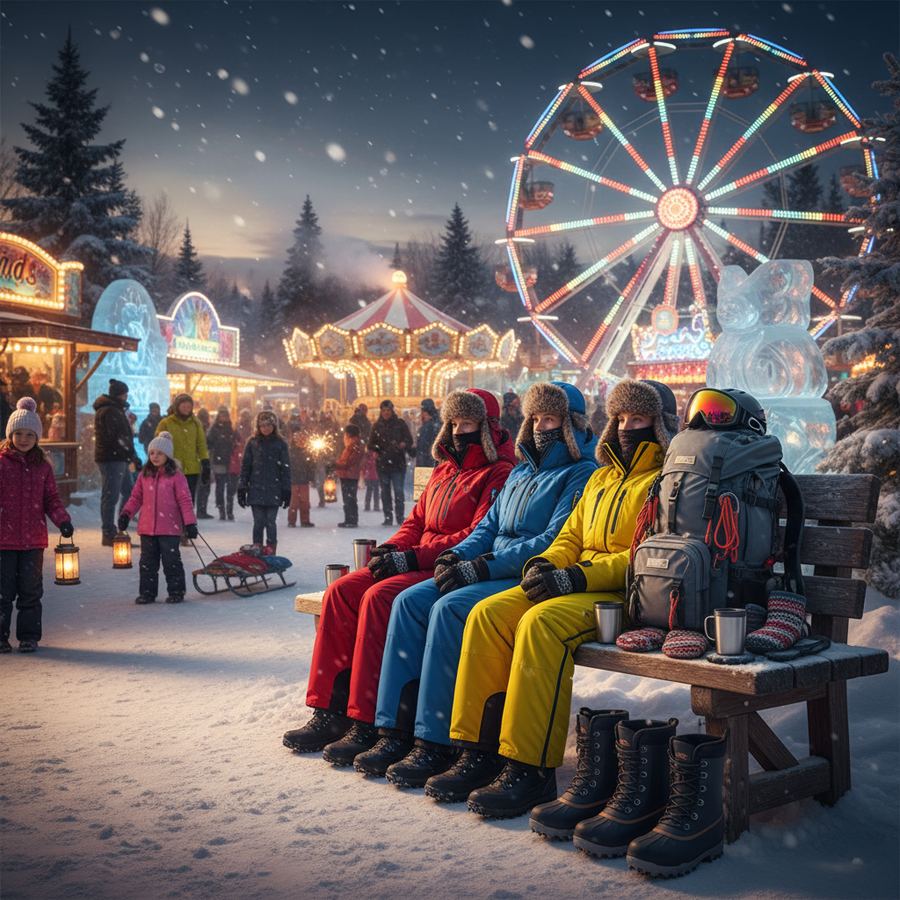
- Small backpack: For carrying extra layers, hand warmers, snacks, and water.
- Insulated water bottle: Staying hydrated in cold weather is important but often forgotten. An insulated bottle keeps water from freezing.
- Lip balm with SPF: Cold, dry air and reflected UV cause chapped lips quickly.
- Phone battery pack: Cold temperatures drain phone batteries rapidly. Keep your phone in an inside pocket close to your body, and carry a portable charger as backup.
- Cash: Some outdoor vendors at winter events prefer cash, and ATMs may be limited.
Temperature Guide
What to Expect
- 0 to -10 C:
- Standard winter gear. Two layers plus shell. Comfortable for most people with basic cold-weather clothing.
- -10 to -20 C:
- Full winter gear required. Three layers, insulated boots, hand warmers. Plan regular warming breaks.
- -20 to -30 C:
- Extreme cold. Maximum insulation, balaclava, and limited time outdoors between warming breaks. Common at Quebec Carnival and Festival du Voyageur.
- Below -30 C:
- Exposed skin can freeze in minutes. Full coverage required. Limit outdoor exposure. These temperatures occur at prairie and northern events.
Related Guides
Winter Carnivals Guide
Our roundup of the best winter events across Canada.
Attending With Kids
Extra tips for dressing children for winter events.