
Feeding the Crowd Safely and Legally
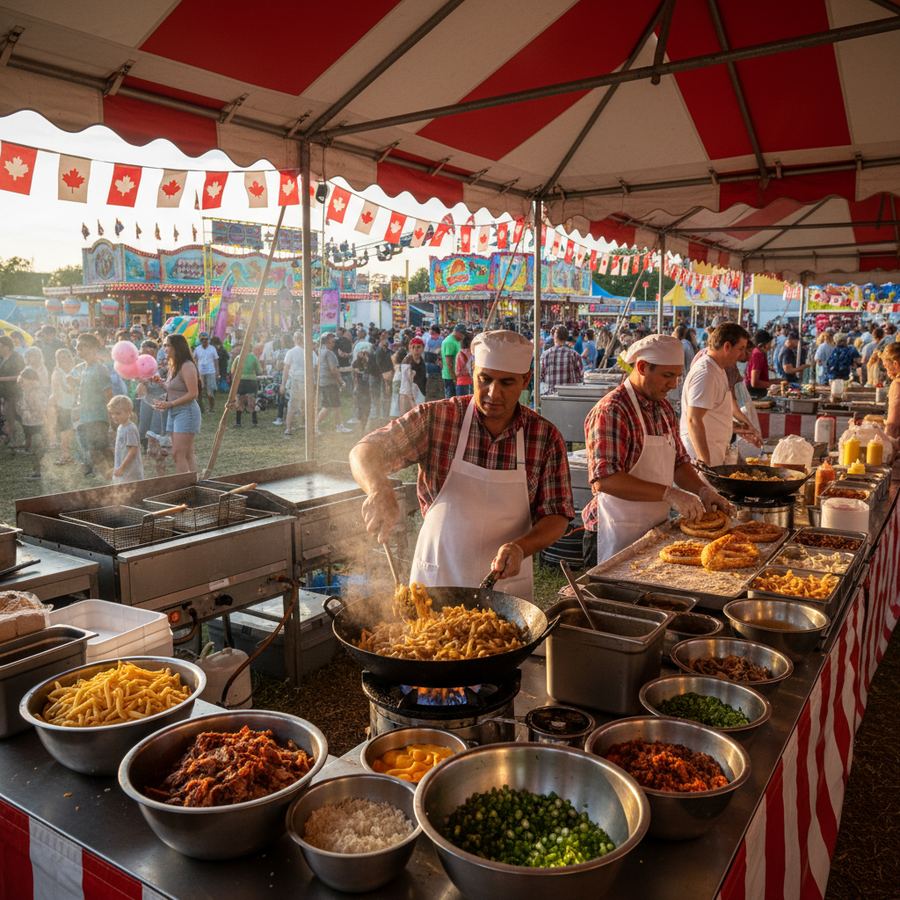
Food is one of the biggest draws at any Canadian carnival or fair, but serving food to the public comes with significant regulatory obligations. Food vendor permits are required for anyone selling or distributing food at a public event in Canada, and the requirements cover everything from food handling training to equipment standards to waste disposal. For event organizers, ensuring that all food vendors on your site are properly permitted is both a legal requirement and a practical necessity for protecting your attendees and your event's reputation.
Food safety regulation in Canada is a shared responsibility between federal, provincial, and municipal governments. The general framework is established by the federal Food and Drugs Act and the Safe Food for Canadians Act, but the day-to-day regulation of food service at events falls primarily to provincial and municipal health authorities. This means that the specific requirements vary depending on where your event is held, and organizers must confirm the rules with their local public health unit.
General Requirements Across Canada
Temporary Food Service Permits
Most municipalities require food vendors at public events to obtain a temporary food service permit from the local public health unit. The application process typically involves submitting a menu, a site plan showing the vendor's setup, documentation of food handling training, and proof of liability insurance. Applications should be submitted well in advance of the event; processing times of two to four weeks are common, and some municipalities require even more lead time for large events.
Food Handler Certification
Most provinces require that at least one person at each food vendor operation hold a valid food handler certification. The specific certification varies by province: Ontario recognizes the Food Handler Certification Program offered through municipal health units; Alberta has the Alberta Food Safety Basics certification; BC requires FoodSafe Level 1. The training covers safe food storage, temperature control, cross-contamination prevention, personal hygiene, and allergen management. Certification courses are typically available online and can be completed in a single day.

Equipment and Facility Standards
Food vendor setups at events must meet specific standards for food preparation surfaces, handwashing facilities, waste disposal, and temperature control. The general requirements include a three-compartment sink or equivalent for washing, rinsing, and sanitizing equipment; a separate handwashing station with hot and cold running water, soap, and paper towels; adequate refrigeration to maintain cold foods below 4 degrees Celsius; and equipment capable of maintaining hot foods above 60 degrees Celsius.
Temporary food setups must also address pest control, waste management, and the protection of food from environmental contamination. Enclosed food preparation areas (tents, trailers, or enclosed booths) are generally required, and food must be stored off the ground and protected from dust, insects, and weather. Food trucks and trailers that are permanently equipped for food service often meet these requirements by design, but tent-based vendors need to plan their setup carefully.
Water Supply and Waste
Vendors need access to a potable water supply and a grey water disposal system. Event organizers are responsible for providing or arranging water service for vendors, and the water system must be approved by the local health authority. Grey water (wastewater from food preparation and handwashing) cannot be dumped on the ground and must be collected and disposed of properly. Solid waste management, including food waste, must also be planned in advance and approved by municipal authorities.
Provincial Variations
Ontario
Ontario's food safety framework for events is administered through municipal public health units under the Health Protection and Promotion Act. Each health unit maintains its own application forms and processes for temporary food service permits. The Ontario Food Premises Regulation (O. Reg. 493/17) sets out the specific requirements for food service operations including temporary setups. Health inspectors conduct on-site inspections during events and have the authority to shut down vendors that do not comply.
Quebec
Quebec's food safety requirements for events are administered through the Ministere de l'Agriculture, des Pecheries et de l'Alimentation du Quebec (MAPAQ). Vendors serving food at events in Quebec must comply with MAPAQ regulations, which include food handler training requirements and facility standards. The application and inspection process operates in French, and organizers should plan for communication in the province's official language.
Western Provinces
Alberta, BC, Saskatchewan, and Manitoba each administer food vendor permits through their provincial health authorities or regional health districts. The general requirements are similar across the western provinces: food handler certification, temporary permits, equipment standards, and on-site inspections. Specific forms and processes can be obtained from the relevant health authority in your region.
What Event Organizers Should Do
Vendor Vetting
Event organizers should establish clear food safety requirements in their vendor contracts and verify compliance before the event. Require all food vendors to provide copies of their food handler certifications, liability insurance, and any applicable permits. Include language in your vendor agreement that gives you the right to remove vendors who do not meet safety standards.
Coordinate with Public Health
Contact your local public health unit early in the planning process. Explain the size and nature of your event, the number of food vendors you expect, and the types of food that will be served. Health officials can guide you through the permit process and let you know about any special requirements for your jurisdiction. Building a good relationship with your local health inspector makes the permitting process smoother and reduces the likelihood of problems during the event.
Allergen Awareness
Food allergens are an increasingly important consideration for event food service. Encourage vendors to clearly label common allergens in their menu items, and ensure that at least some vendors offer options for attendees with dietary restrictions. While allergen labelling requirements for temporary food service are still evolving in Canada, proactive allergen management demonstrates good practice and reduces liability risk.
Related Resources
Alcohol Permits
Licensing requirements for serving alcohol at events.
Event Insurance
Liability coverage for carnival organizers and vendors.